
https://www.nofer.co.uk/


This month´s PROMOTIONS
Emergency eye wash and shower stations

Emergency eye wash stations and safety showers for laboratories, workshops, factories, schools and construction sites. Choose wall-mounted, pedestal or desktop eye wash units, emergency showers, combined eye wash and shower stations, or a portable eye wash station for sites without a water supply. The range has been tested to EN 15154 and ANSI/ISEA Z358.1-2014.

£
£

Showing products per page

10 sto reach the unit from the hazard
15 minof continuous flushing
16–38 °Ctepid water temperature
Weeklyactivation test

How to choose an emergency eye wash station

An emergency eye wash station flushes chemicals, dust or other contaminants out of the eyes in the first seconds after an accident, when treatment matters most. The right unit depends on the hazards identified in your risk assessment, the space available and whether there is a water supply nearby.

Wall mounted emergency eye wash station

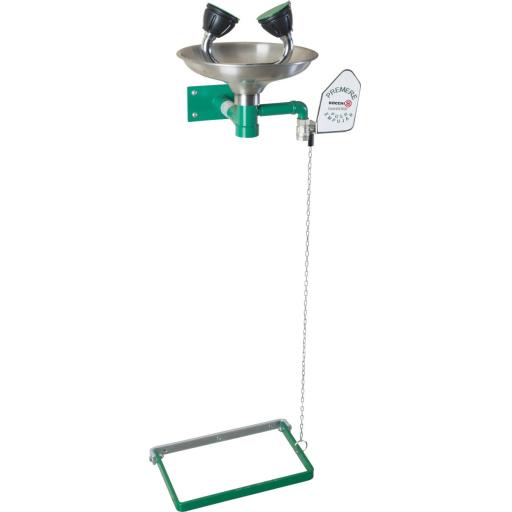
Wall-mounted eye wash stations

A wall-mounted eye wash station is the most compact option. It suits workshops, laboratories and plant rooms where a water supply is close to the hazard. Choose a stainless steel basin for heavy-duty or corrosive environments.

View products →
Pedestal emergency eye wash station

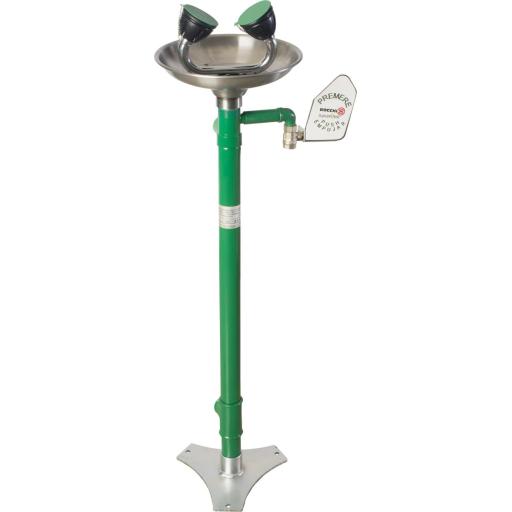
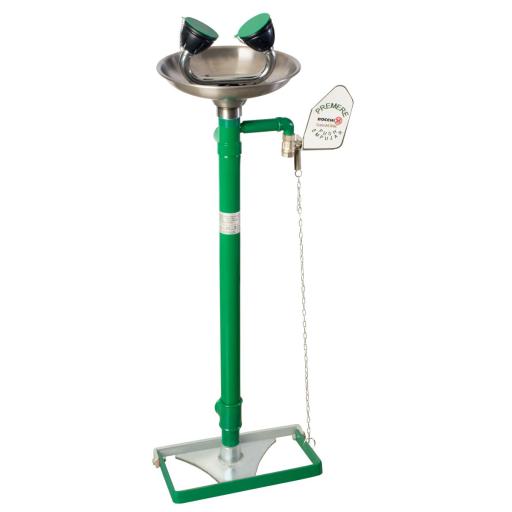
Pedestal (floor-standing) eye wash stations

Pedestal units stand on their own column, so they can be installed in open areas close to the point of risk. Available with hand operation, a side lever or a foot pedal, which leaves both hands free to hold the eyes open.

View products →
Desktop emergency eye wash unit

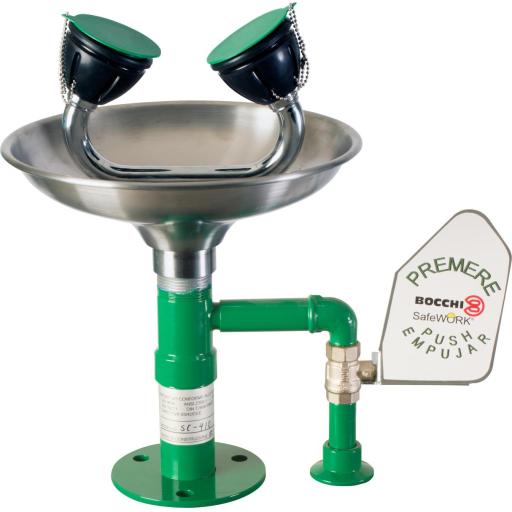
Desktop and bench eye wash units

Desktop eye wash units fit onto a laboratory bench or sink and are activated by hand. Single and double-nozzle versions, with or without a wall support. A practical choice for school science labs and small laboratories.

View products →
Emergency safety shower with pull rod

Emergency safety showers

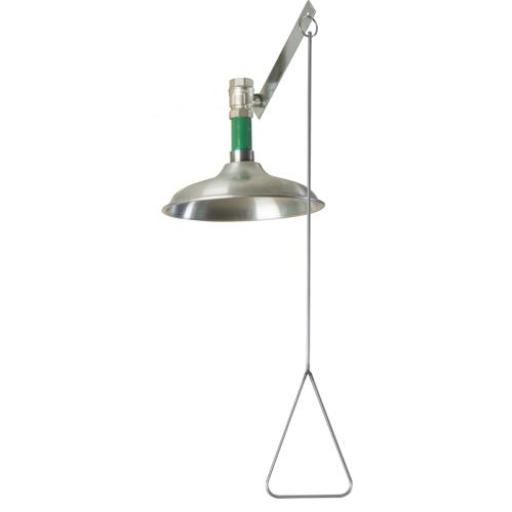
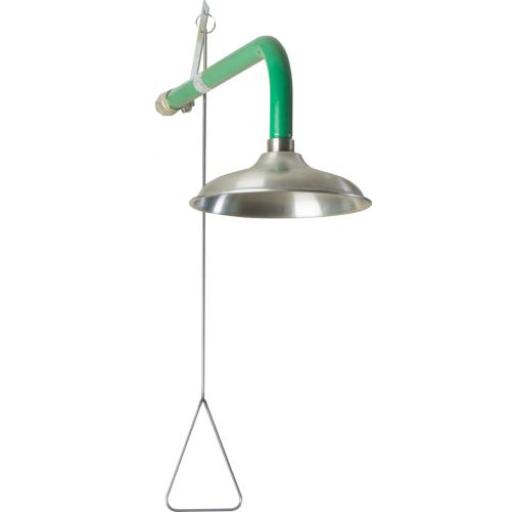
Where a person could be splashed over a large part of the body, an emergency shower is needed as well as an eye wash. Our emergency showers install on the ceiling, wall or floor with pull-rod operation, plus a hands-free platform model.

View products →
Combined emergency eye wash and shower station

Combined eye wash and shower stations

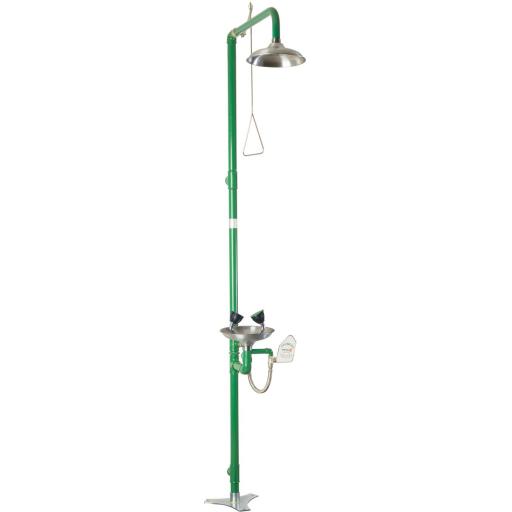
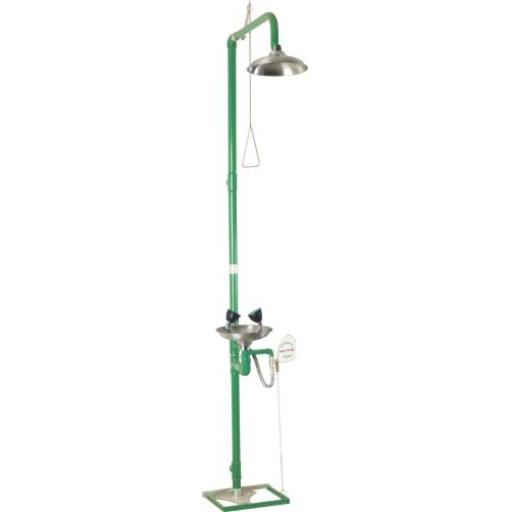
A combined emergency eye wash and shower station puts both functions on a single floor-standing unit, so one installation protects the eyes, face and body. Versions with a foot pedal for the eye wash are available.

View products →
Portable emergency eye wash station

Portable eye wash stations

For sites without a plumbed water supply, such as construction sites, warehouses or remote plant, choose a portable emergency eye wash station. It works from its own 18-litre pressurised tank.

View products →

Which eye wash station for your site?

As a starting point, these are the units that usually suit each type of site. The final choice should follow your risk assessment and the substances involved.

Laboratories

A desktop eye wash unit fits onto the bench or sink, close to the work. Where there is wall space near the hazard, a wall-mounted station is a compact alternative.

View desktop units →

School science rooms

Desktop units with one or two nozzles fit onto a lab bench or sink and are activated by hand, which makes them a practical choice for school science labs.

View double units →

Factories and chemical handling

A pedestal eye wash station can stand in an open area close to the point of risk. Side lever and foot pedal versions leave both hands free to hold the eyes open.

View pedal units →

Workshops and plant rooms

Where a water supply is close to the hazard, a wall-mounted eye wash station saves floor space. Choose a stainless steel basin for heavy-duty or corrosive environments.

View wall units →

Construction sites and warehouses

With no plumbed water supply nearby, a portable eye wash station works from its own 18-litre pressurised tank.

View portable units →

Risk of splashes to the body

If a person could be splashed over a large part of the body, a combined eye wash and shower station covers the eyes, face and body from one unit.

View combined units →

Emergency safety showers: which type?

An emergency drench shower rinses chemicals, acids, dust or other contaminants off the body. The main choice is how it can be installed on your site. Ceiling, wall and floor models are available with a polypropylene or stainless steel shower head.

  • Ceiling-mounted emergency shower: installed overhead, with a pull rod and triangle handle. View ceiling shower
  • Wall-mounted emergency shower: fixed to the wall on a horizontal arm, with a pull rod and triangle handle. View wall shower
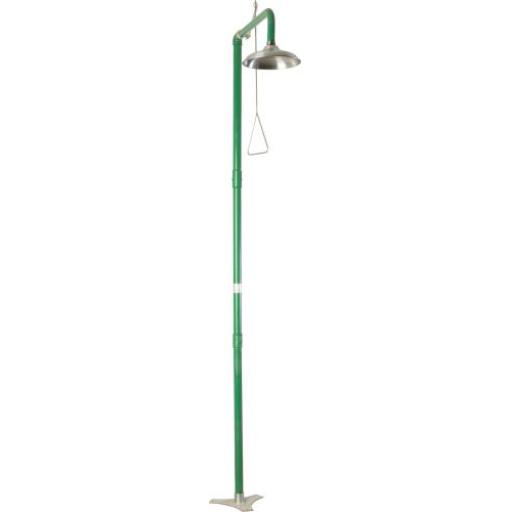
  • Floor-mounted emergency shower: a free-standing unit with a rigid pull lever and triangle handle. View floor shower
  • Platform-activated shower: starts as soon as the user steps onto the platform, with no need to find a handle when the eyes are affected. View platform shower

Stainless steel or polypropylene?

Most durable

Stainless steel

Stainless steel is the most durable choice for industrial sites and areas exposed to impacts or corrosive substances.

Best value

Polypropylene

Polypropylene resists many chemicals and is a cost-effective option for laboratories and general workplaces.

Standards: EN 15154 and ANSI Z358.1

NOFER emergency eye wash stations and showers have been tested by Applus Laboratories to EN 15154 (parts 1 to 4) and ANSI/ISEA Z358.1-2014. Download the test certificate (PDF) for your O&M manual or tender.

EN 15154-1Emergency body showers connected to the water supply
EN 15154-2Eye wash units connected to the water supply
EN 15154-3Body showers not connected to the water supply
EN 15154-4Eye wash units not connected to the water supply

ANSI/ISEA Z358.1 is the American standard and is widely referenced around the world for installation and maintenance, including the 10-second and 15-minute rules.

Do you legally need an eye wash station in the UK?

Short answer

There is no single UK law that requires every workplace to have an eye wash station. Under the Management of Health and Safety at Work Regulations 1999, employers must assess the risks to their staff. If that risk assessment identifies a risk of eye injury, you need to provide suitable first-aid facilities for it.

Where hazardous substances are used, the COSHH Regulations 2002 (regulation 13) require employers to plan for accidents and emergencies, including providing appropriate first-aid facilities. HSE first aid guidance (L74) adds that, if mains tap water is not readily available for eye irrigation, at least one litre of sterile water or sterile saline should be provided in sealed containers. For chemical splashes, a plumbed or portable eye wash station that can flush the eyes for longer is often the safer choice.

Where to install an eye wash station and how to maintain it

  • 10-second rule: ANSI Z358.1 recommends that an eye wash or emergency shower can be reached within about 10 seconds of the hazard, on the same level and with no obstructions.
  • 15 minutes of flushing: units should be able to deliver a continuous flow for at least 15 minutes.
  • Tepid water: ANSI Z358.1 recommends water between 16 and 38 °C, as very cold water can stop the injured person from rinsing for long enough.
  • Weekly activation: run each unit weekly to flush the pipework and check that it works, and inspect it fully once a year. Use our eye wash station inspection checklist.
  • Signage: mark the location with a clear safety sign and keep the area well lit and free of obstructions.
  • Need help? Send us your site details and the substances involved and we will recommend the right model.

Frequently asked questions

What is an emergency eye wash station?

It is a fixed or portable unit that delivers a gentle, continuous flow of water to both eyes at once, so a person can rinse out chemicals or particles immediately after an accident. It is activated in one movement and stays on, leaving the hands free to hold the eyes open.

What is a 15-minute eye wash station?

It is an eye wash station that can provide a continuous flow for at least 15 minutes, as recommended by ANSI Z358.1. Plumbed eye wash stations meet this because they are connected to the water supply. Portable stations rely on the capacity of their tank.

How far should an eye wash station be from the hazard?

ANSI Z358.1 recommends that it can be reached within about 10 seconds, without stairs, doors or obstacles in the way. Where very corrosive chemicals are used, it should be installed right next to the hazard.

How much does an emergency eye wash station cost?

Prices in our range start at around £190 for a desktop eye wash unit and around £300 for a wall-mounted eye wash station. Emergency showers start at around £145, and combined eye wash and shower stations at around £835. All prices include VAT.

Do you deliver across the UK?

Yes. We deliver across the UK in 4 to 6 working days. For larger projects or several units, contact us for a trade quote.

Not sure which station you need?

Tell us about your site and the substances involved, and we will recommend the right model.

Contact us →